
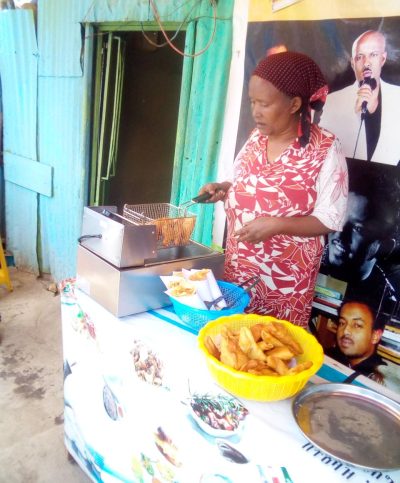
Etaferahu Shifraw, a mother of three from Lideta Sub-City, Addis Ababa, faced severe financial hardship after losing her husband. Through ProPoor Ethiopia’s support, she received a modern chips cooking machine and started a home-based business selling chips and sambussa.Her business now provides income to support her children’s education, household needs, and food security, while restoring her confidence, dignity, and hope for a more self-reliant future.
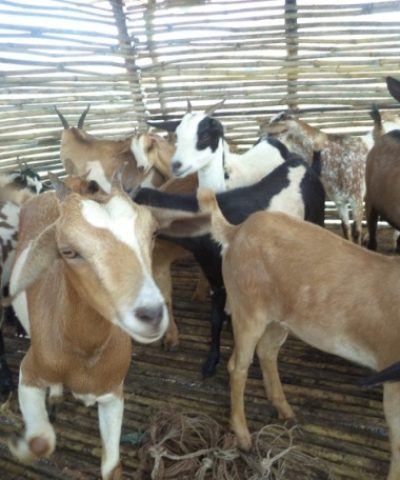
Restoring Hope Through Livelihood Support Hayantu Gutma, an elderly mother of five from Kamashi, Benishangul-Gumuz, struggled to meet her daily needs without a sustainable source of income.After assessing her experience and local opportunities, the project provided her with **eight goats** to start a small livestock-rearing activity. Her existing experience with animal care helped her manage the goats successfully.The goats have since begun reproducing, **increasing her household assets and creating future income opportunities**. The support has also improved her food security, confidence, and independence, giving Hayantu renewed hope and dignity.
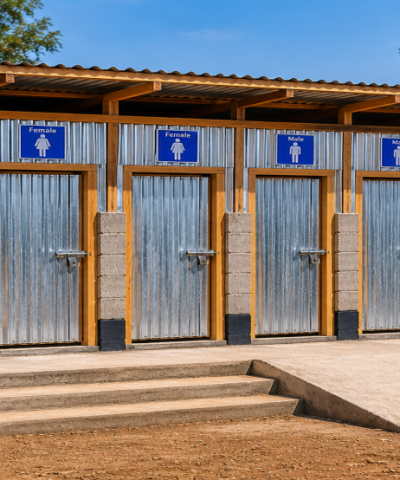
The project supported 24 GBV survivors across two associations in Lideta Sub-City by improving public shower and latrine services.At Zenebech Tafese and Friends Shower and Latrine Share Company, 12 women received electricity, boilers, essential supplies, and improved facilities. The upgrades enabled the 8 shower rooms and latrines to operate at full capacity, with members working in two shifts.Access to hot water increased the service fee from 5 ETB to 10 ETB per client, significantly improving beneficiaries’ income while providing the surrounding community with better, affordable sanitation and hygiene services.
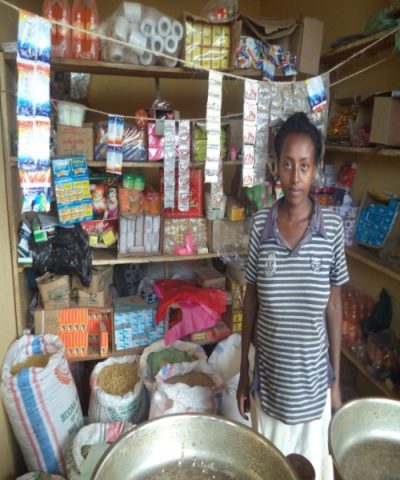
The ANDINET PWDs Cooperative, established in 2023 in Agalomet Woreda, brings together 20 Persons with Disabilities (PWDs) to improve livelihoods, income, and social inclusion.With support from PEDO, including beneficiary selection, business training, and access to start-up capital, the cooperative began purchasing goods wholesale and selling them locally. The business is now generating profit, improving members’ economic stability, confidence, and participation in the community.The initiative demonstrates how training, opportunity, and coordinated community support can empower Persons with Disabilities to become active contributors to local economic development.
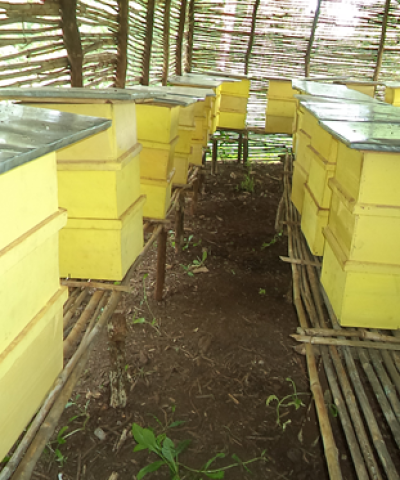
In 2024, PEDO supported the establishment of the MAKOSHA Elders Cooperative in Sherkole Woreda, bringing together 20 elderly members to create sustainable livelihoods and strengthen social inclusion.PEDO provided a beehive shed, bees and equipment, practical beekeeping training, and cooperative management support, while the local administration provided a working space. The cooperative is now actively producing honey, creating an important source of income, confidence, dignity, and self-reliance for its members.The initiative demonstrates how skills, resources, and community support can create new opportunities for vulnerable elderly people.
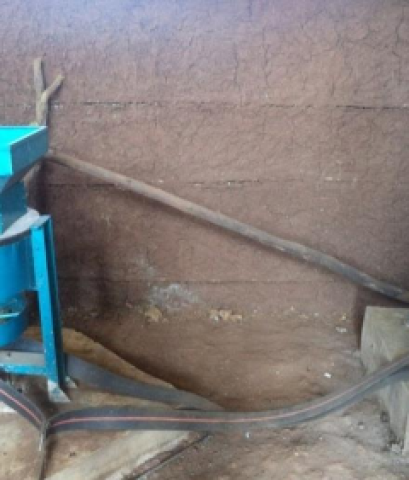
The MIJIGIMA PWDs Cooperative Union was established and legally registered in Kamashi Town, bringing together 20 Persons with Disabilities — 15 women and 5 men — to strengthen their economic wellbeing, independence, and social inclusion.With PEDO’s support, including advocacy, technical assistance, funding, and access to 140 hectares of urban land, the cooperative established a flour grinding mill as an income-generating business. Members now manage and operate the business according to their abilities, generating income that has improved their livelihoods, self-reliance, and participation in the community.The initiative demonstrates how access to resources, skills, and opportunity can transform lives and promote inclusion for Persons with Disabilities.
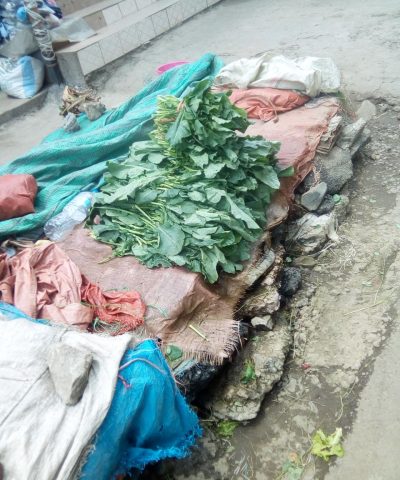
Beletu Molla, a GBV survivor and mother of two, faced significant economic challenges as she raised her children alone. Limited income opportunities made it difficult to meet basic needs such as food, education, and household expenses.In 2022, PEDO provided financial support that enabled Beletu to start a small vegetable trading business, selling gulit vegetables and cabbages in her local community. Through dedication and hard work, the business became a reliable source of income.Today, Beletu is able to support her family independently and provide better care for her children, demonstrating how targeted economic support can help GBV survivors rebuild their lives with dignity, confidence, and hope.
In Assosa Town, change began with evidence. Pro Poor Ethiopian Development Organization, PeDO, commissioned an independent study to assess the socio-economic impact of khat chewing. The findings were clear—youth livelihoods, health, and productivity were at risk.These results were shared through community workshops, panel discussions, and media, sparking urgent public dialogue. In response, the Assosa Town City Council established a by-law drafting commission made up of diverse stakeholders, including government officials, community leaders, youth representatives, and law enforcement bodies.Together, they crafted a by-law to regulate the distribution and consumption of khat and other substances. The draft was endorsed by the City Council and enforced by the Assosa Town Police Commission.Today, the impact is visible. Thousands of young people are overcoming addiction, changing behavior, and becoming active citizens. This transformation highlights the power of community-driven solutions—where evidence, collaboration, and leadership come together to create lasting change.
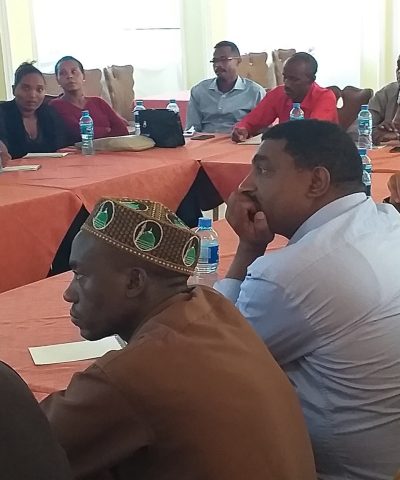
Community-Based Organizations (CBOs) empowerment is one of the core thematic areas of Pro Poor Ethiopian Development Organization (PeDO). PeDO strengthens the institutional capacity, leadership, governance, and sustainability of community-based structures, including youth groups, women's associations, self-help groups, savings and credit groups, peace committees, and disability associations. The organization provides training, mentoring, organizational development support, networking opportunities, and resource mobilization assistance to enable CBOs to effectively identify local priorities, advocate for the rights of their communities, and lead inclusive, accountable, and sustainable development initiatives. By empowering CBOs, PeDO promotes locally led development, community resilience, social cohesion, and active citizen participation, ensuring that communities are at the center of decision-making and long-term development.
Anchinesh Tesfaye, a survivor of gender-based violence, previously lived on the streets under extremely difficult conditions while caring for her four children. Poverty and lack of support made it difficult to provide food, education, healthcare, and other basic needs.Through the project, Anchinesh received psychosocial support, counseling, and livelihood assistance. Based on her experience and interest in bread production, she received a traditional bread-baking machine and 50 kg of wheat flour to start her business.Through determination and hard work, her business grew, and she became a major bread supplier to local distributors. Her income now enables her to better support her children while strengthening her confidence, dignity, independence, and hope for the future.
